Garden with Grace

"I hope that while so many people are out smelling the flowers, someone is taking the time to plant some." ~H.Rappaport


4 Comments

28 Day Transformation of a Sad Sod Situation

Of all of the perennial plants in the garden, growing a lush, green lawn has been the most challenging over the years.  When my grandfather was alive, maintaining the perfect lawn was his obsession.  The entire yard consisted of a moderate sized vegetable garden and the greenest, weed-free lawn in the neighborhood, if not the entire City of Nashua.

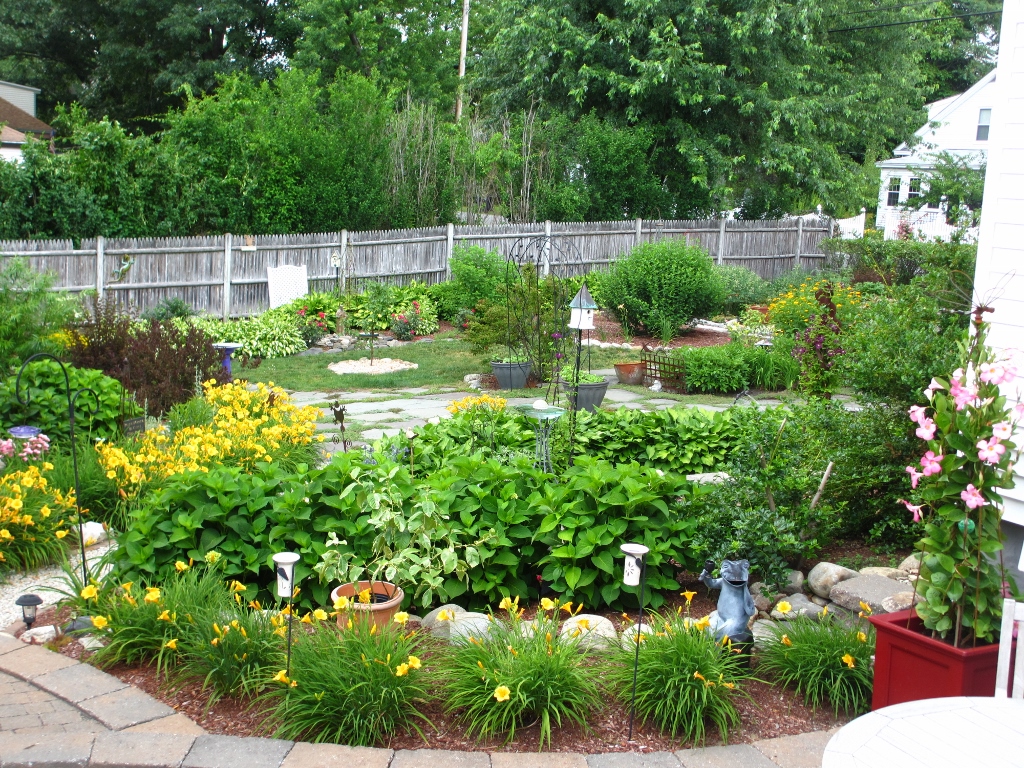
As the years have gone by, the lush lawn has evolved into large perennial gardens of local plants and flowers, most of them drought and deer resistant. However, there are two areas of the backyard with grass — each about the size of a putting green.  The paths through the gardens wind around these patches of lawn.

After the removal of an old, dying cherry tree about 7 years ago, the grass just wasn’t doing well while the tree’s roots rotted. As a result it was replaced with fresh loam and sod (about 6 years ago).

It looked beautiful, but without an irrigation system, it required a lot of water. Yes, so much water that that the first water bill of that summer was outrageously obscene. Thankfully, the investment resulted in lush, beautiful grass until the oak tree abutting my property that gave nice shade was removed last summer.

Like the cherry removed a few years earlier, it was a dying, large, old tree. It was dropping 10+ foot branches and was a hazard to the neighbor’s home and the fence on our property line. The tree became more of a concern after the dangerous, late October storms 2 years in a row – the Halloween Snowstorm and Hurricane Sandy.

The removal of the oak in the late spring of 2013 dramatically changed the sunlight across the entire garden. Overall, the evolution to a full sun area was good (actually great!) for the majority of the garden.

Except for the sod.

A Sad Sod Situation (with apologies to Sir Elton John!)

Over the past two summers, the soft, lush, green lawn turned into a brown, crunchy mess (the only green to survive consisted of weeds, which actually did very well this past summer.)  Oh, yes, it was the sun scorching the grass, but also the fact that I over fertilized in the fall of 2013 added an extra ingredient for disaster.  This is my best of life experience example that supports the idiom that “Too much of a good thing can be bad.”IMG_4877

After some research and a little desperation (for a few days, I considered buying that “As Seen on TV” product called Hydro Mousse!), the reality hit that the dead sod needed to just be removed and a new lawn had to be planted.  Timing was perfect for this late August decision because fall is the best time to plant a lawn and focus on caring for grass.

Hope is on the Way

On September 4, a landscaper started the project. In an hour, he and his crew removed what was left of the old, dead sod. On September 5, he stopped by for another hour and spread fresh, new loam.  Then, on the morning of September 6, the Tall Fescue grass seed was planted. He actually planted 2 layers of it.

Within a week, little tints of green stated to appear.  Within 2 weeks, the areas of new grass started to show real life.  At 3 weeks, it was time to a quick mow! September was cool but dry in Nashua, so the new grass was watered 2x a day for 3 weeks. (The September water bill has not yet arrived!)

Finally…..It’s Good to Touch the Green, Green Grass of Home

Today, marks week 4.  I’m just amazed at the transformation that has occurred in 28 days.IMG_4978

There are still some small open patches that will be tended to in the spring, but the grass is once again soft, lush, and green.

It’s the kind of lawn that makes you want to kick off your shoes and walk barefoot across. Exactly like you’d expect of the green, green grass of home.

2 Comments

Gorgeous, glowing garden sunset…

The weather in NH was perfect today. It ended with an evening on the back patio.
It was magical to watch the male, ruby-throated hummingbird visit every 3 – 4 minutes between 8 and 8:30pm ET.

Successful Hummingbird Watch in the garden tonight!

Successful Hummingbird Watch in the garden tonight!

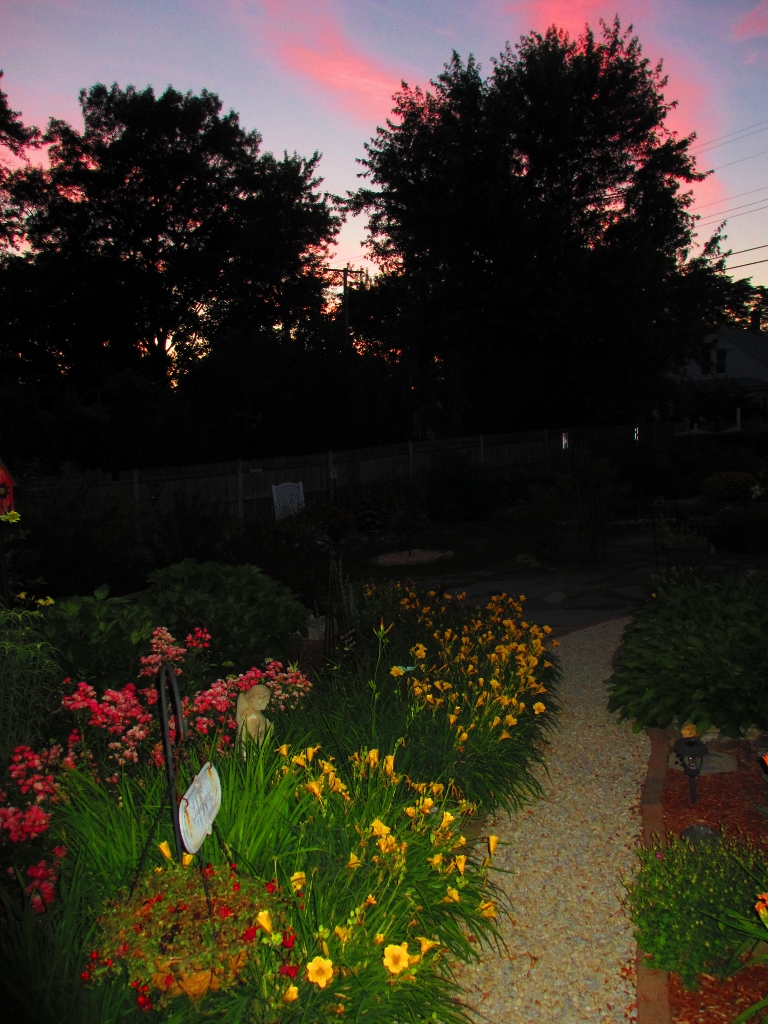
It was even more magical to see a gorgeous sunset that made the garden glow tonite.

Our gorgeous, glowing garden sunset.

Our gorgeous, glowing garden sunset.

All accompanied by a garden inspired cocktail – based on a Vesper Martini. Here’s my recipe (for each cocktail!)
2.5 oz Effen Cucumber Vodka
1.0 oz Tangueray Rangpur Gin
0.5 oz Lillet Blanc
Stir with ice for 2-3 minutes. Pour over freshly sliced, cold cucumbers (preferrably from your own garden or local farm) and enjoy!

Garden Cucumber Vesper Cocktail

Garden Cucumber Vesper Cocktail

Cheers!


6 Comments

Boom…..Bloom! Here come the Daylilies!

A few years ago, I had the bright idea that daylilies would be a good filler for the perennial gardens in the backyard. I thought they would fit nicely among the peony bushes, adding continuous color in the garden throughout July and August. What I didn’t know then, but will admit now, is that daylily collecting can become an obsession.

There’s something special about a flower that blooms for only one day.

During July, I walk through the garden each morning to find a new daylily that has appeared. It always seems like a miracle to find that another flower bloomed overnight. There are always more buds on each stem, ready to open the next day, bringing true delight to any gardener during the hottest and sometimes most oppressive days of the New England summer.

For such a spectacular flower, the daylily is not fussy at all. Thankfully, they stay practically pest-free and don’t need very much attention.

Some deadheading of the spent blooms and a dose of fertilizer and compost in the spring is all the T.L.C. that these flowers need. It’s important to note that while they are beautiful, we no longer grow Asian or Oriental varieties of lilies in the garden due to the problems with the Asian Lily Beetle.

The daylilies that I’m now obsessed over belong to a genus called Hemerocallis, derived from the Greek words Hemera meaning day and kallos meaning beauty. Here are some of the spectacular daylilies currently in bloom in our Nashua, NH garden this week.

Garden paths lined by Stella d'Oro Daylilies.

Garden paths lined by Stella d’Oro Daylilies.


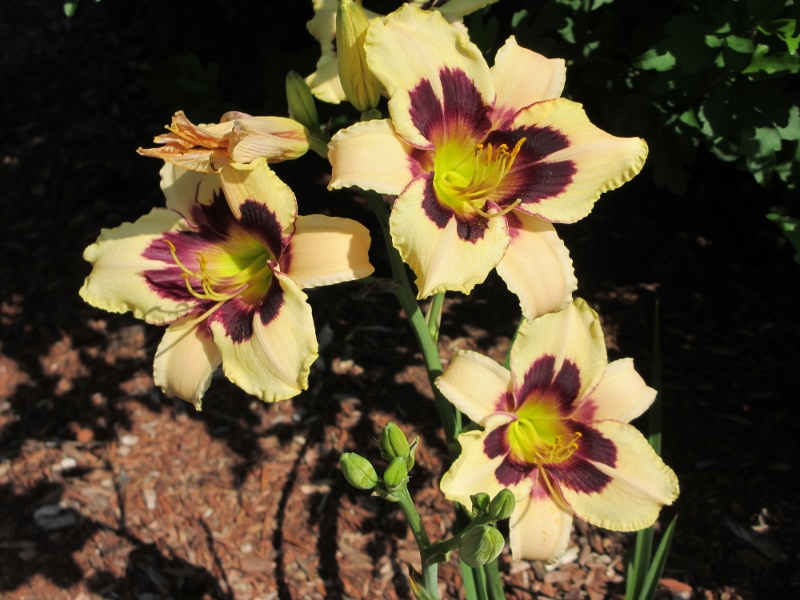
This beauty, called Wild Horses, was planted in spring 2013, but never bloomed until this summer. Definitely worth the wait!

IMG_4231 (800x600)

Not sure of the name, but these bright blooms bring a splash of color in between peony bushes and iris that bloomed in June.

IMG_4232 (800x600)

This is one of the first fancy daylilies that was added to the garden about 10 years ago. It’s called Strawberry Candy.

These Lemon daylilies are striking with the nearby Knockout roses.

These Lemon daylilies are striking with the nearby Knockout roses.

What are your favorite varieties of daylilies that I should consider adding to the garden? Please, comment and let me know!


Leave a comment

Inspiration!

Maintaining a garden blog has been a challenge during  a long, harsh winter in New Hampshire.

While my head has been filled with motivation to keep a blog interesting during the midst of a winter filled words like “polar vortex” and “arctic blast”, actual inspiration to get the thoughts out of my head and out to the digital world has been lacking.

Until today…

Maybe the idea of an extra hour of daylight this evening and the pending arrival of spring, along with a great find that was tucked away in a binder of gardening materials, was all that I needed!

Here’s the great find. It’s a poem that a former neighbor named Kate,  wrote for my mom, Kathy, about the garden. It was written over a decade ago. Before the dog named Grace came along to inspire this garden blog.

scan0002 (1198x860)

I love how words, put onto paper to create such a lovely poem, so many years ago, can have such a more impactful meaning many years later.  Which brings to mind this quote about inspiration that I think relates perfectly to gardening.

“Every moment and every event of every (wo)man’s life on earth plants something in his soul.” -Thomas Merton


Leave a comment

Basket of Brussels Sprouts (Yum! or Yuck?)

I’ve been visiting and working in the garden at Greeley Park every two or three days during the past couple of weeks.

This morning’s 6:30 am visit was quiet, with the exception of the crickets chirping (it definitely sounds like August when the crickets chirp quietly in the morning!) Oh, and I may have been overheard cursing every time that I picked a tomato that had blossom-end rot.

Thankfully, today was the first day that I picked more good tomatoes than bad ones. It seems that the blossom-end rot only affected the early fruit that set up on the vines when the weather was fluctuating between very dry and very wet in early June.

The consensus (from all of the self-proclaimed gardening experts who feel the need to weigh in on this topic) is that since only one type of tomato was affected, there was something wrong with the actual plants not being able to take in enough calcium during the early part of the growing season. Affected are the Polish Linguisa heirloom tomatoes. Polish Linguisa is paste variety of tomato that I had success growing in containers in my backyard the past two seasons.  The Sweet Cherry 100s and Brandywines are doing great and there should be a full harvest in about a week. (I have so many great tomato recipes, but honestly, I look forward to a simple BLT sandwich with at least one of them!)

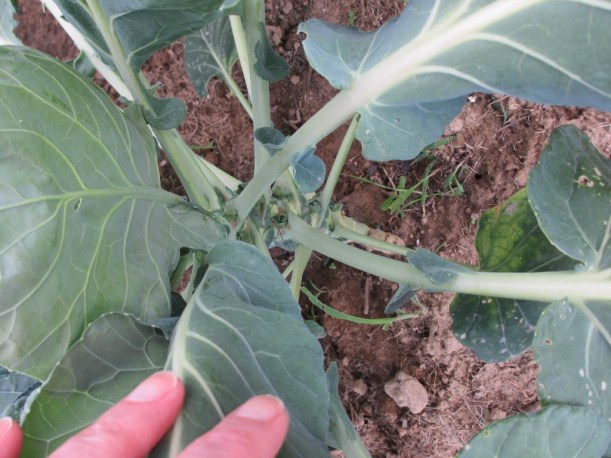
After picking some pretty good looking tomatoes,  as well as finding a few pieces of broccoli, about 10 string beans, and a few dozen (more!) seranno chili peppers (I think I’ve picked over 200 the past three weeks!), I checked on the brussels sprouts.  Here’s how they looked a few weeks ago.

Brussel Sprouts sprouting in June 2012

Brussels Sprouts sprouting in June 2012

Brussels sprouts are supposedly better after they have been touched by frost, so I was not anticipating that they would be ready until late September or early October.

I was delighted to discover that today was the day for the first brussels sprout harvest! This a veggie that my grandfather tried over and over to grow in his own garden without success.  I’m thinking that he may have paid too much attention to them because I did almost nothing and am seeing great success this summer! They just needed some organic compost (created in my own backyard with chicken poop from my neighbor’s five hens) and a few sprays of organic Neem (to keep the moths and catepillars at bay).

Since I didn’t  have my usual gardening tools with me to cut off the stalk of the plant this morning (I went to the garden just to pick a few cherry tomatoes and the brussels sprout harvest was not on my radar for today), I simply snapped off most of the leaves and pulled the plant right out of the ground (well, it actually took a few good tugs).  Surprisingly, the shallow roots weren’t very resistant for a plant with such a big, heavy, sturdy stalk .

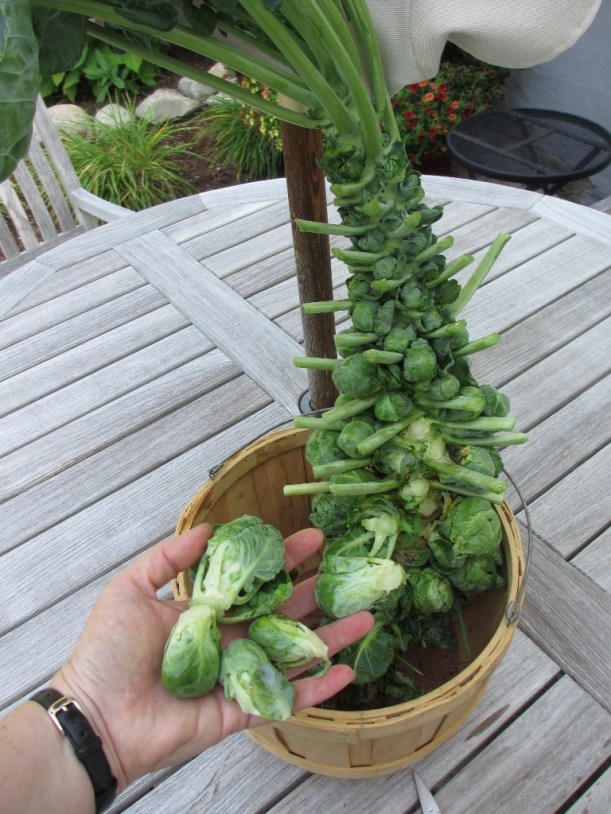
There were 46 (my lucky number this year!) brussels sprouts on this stalk – each had to be cut off individually with a tiny knife. While removing them, I realized that this is one of the reasons why this veggie is so costly, it’s very time consuming to harvest!  A few of the sprouts were size of peas and marbles, but a lot were the size that good brussels sprouts should be…like ping-pong balls.

002 (768x1024)

Brussels Sprouts harvested today.

There are still five more brussel sprout bushes in the garden….they look like they need another month or so to continue growing and will be ready to harvest close to when the first frost is expected in NH.  (That harvest may bring over 200 more brussel sprouts….probably all at once!)

Funny thing about brussels sprouts — you either love them or you hate them!  I have just as many friends who give me a disgusted (yuck!) look when I mention this year’s crop, as I do brussels sprout favorable (yum!)  friends who are expecting “their fair share” of sprouts….soon.

Today’s crop  will be shared (fairly) at tonight’s dinner table with  the gardeners who planted, watered, weeded and kept the bugs away from them. The sprouts will be roasted with extra virgin olive oil and just a touch of sea salt and a twist of fresh cracked pepper.  (Yum!)


1 Comment

Why “Gardening with Grace”?

It’s been over two years since I blogged for PBS New Hour’s Patchwork Nation project, representing Nashua, NH – a ‘Monied ‘burb’.

It’s been over seven years since I first learned how to blog while I was an employee of Sun Microsystems.  (It appears that the group blogs – Women@Sun  and the DogBlog –  I once contributed to are no longer online since Oracle acquired the company.)

I’ve been feeling the need to get back online for a while now, but couldn’t seem to find “my voice”.  I’ve started to tweet, but sometimes find 140 characters constraining! (@SandyBelknapNH).

Then it hit me…blog about something that I really enjoy.  Well, I picked two things!  1. Gardening  2. My dog, Grace.

For this blog, Grace is more than just my pet’s name.  There are so many beautiful  definitions of Grace. My favorite is: ” disposition to or an act or instance of kindness, courtesy, or clemency.”

So here I am, back online, blogging again (more than 140 charaters per post) and I can’t wait to share my perspectives about Gardening with Grace.

And yes, while ‘grace’ has so many definitions….my friends know that I just can’t help myself and will have to include stories about gardening with my dog, Grace, too!