Garden with Grace

"I hope that while so many people are out smelling the flowers, someone is taking the time to plant some." ~H.Rappaport


5 Comments

Pussy Willows Galore!

The Japanese Fantail Pussy Willow has a history of over 20 years in our garden. My mom originally received the first cuttings from a work friend who had a connection to one of the Boston Garden Clubs.  She was excited to bring home five small rooted branches of this exotic plant for the garden. She even had a few to spare and shared them with a neighbor across the street.  Of course, the cuttings that ventured across the street took off and grew into a beautiful tree.  The ones my mother planted didn’t make it through the first season.

So the next year, she grabbed a cutting from the neighbor. This exchange took a few seasons for the plant to finally get established in the garden it was originally intended. Eventually, with pruning to remove bottom branches, my mother created a small, beautiful tree.
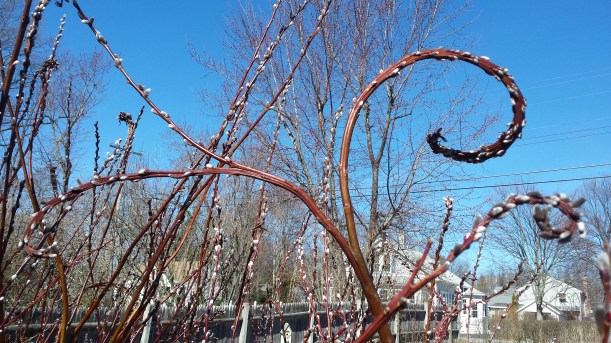
20160312_114345

20150419_114325.jpg

20161103_102245

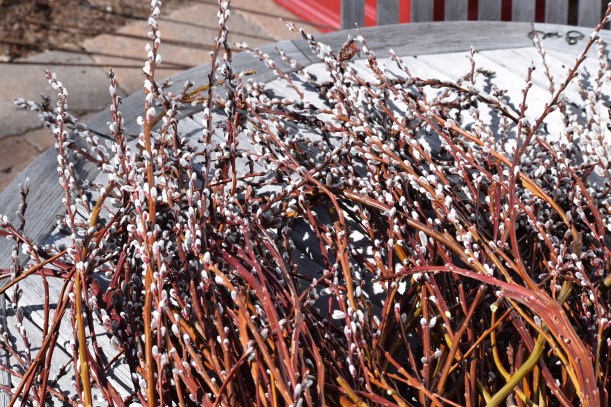
In late winter the weeping, twisted, burgundy colored branches of the Fantail Pussy Willow are covered with tiny, soft, shimmery silver buds, actually known as catkins. By mid-spring, the branches become covered with gold puffs (I almost wrote ‘Gold Fingers’ in keeping with this story’s title!!) of pollen. By summer it leafs out to create a unique summer /fall ornamental shrub. 

Over time, new cuttings from the established Pussy Willow were shared with friends and neighbors, but unfortunately with a less than 50 percent success rate (mostly because non-gardeners wanted to try to plant them and didn’t follow the simple instructions.) The one other place where the cuttings did well was in Hampton Falls, on the New Hampshire seacoast. My friend Bobbi – a true gardener –  was able to create a beautiful tree from one of the early cuttings. It eventually reached over 8 feet tall.

Everything changed in 2011 when the now infamous Halloween Nor’Easter hit New England. The heavy, wet snow decimated many of the trees and shrubs across the region – including the Pussy Willows that we worked so hard to propagate in Nashua and Hampton Falls. The weight of the snow and wind split the trees in half, all the way to the ground. (Lilacs and Bradford Pear trees were also hit hard across the area.)

Bobbi chose to simply remove the damaged tree from her Seacoast garden. In Nashua, my neighbor did some pruning and was able to keep most of the height of the tree shape he created.  On the other hand, in our garden, a decision was made to cut the damage all the way back to ground level to see what would happen. (We also knew we could start all over again with a cutting from next door!) 

While this Pussy Willow grows relatively fast, it took a couple of years for it to eventually fill in the back area of the garden.  Since receiving the first cuttings 20 years ago, my mother always called it a ‘Weeping Pussy Willow’ (Fake Gardening News!)

We finally learned this plant’s true name at the annual Boston Flower Show in 2014 – it is a Japanese Fantail Pussy Willow.  There was a vendor at the show from the midwest with thousands of cut stems, selling them for about  $15/bundle.  My mom and I talked to the grower and learned this Pussy Willow is meant to be a shrub and should be cut back hard every year in late winter, just at the silvery catkins start to emerge.

Even with this newfound knowledge, we never got out in time during 2014 to cut the branches back – then in 2015, during our hysterical/historical winter, the deep snow cover through late March made it a challenge to even get to that part of the garden.

Finally, all conditions were perfect in 2016!  I went out on a bright late winter afternoon and cut the beautiful branches back by almost half.  By the time I was finished, I was worried that I’d cut too much from what suddenly became a bare tree trunk. On the plus side, we now had a huge pile of Pussy Willows branches to use for decoration.

Yes, Pussy Willows Galore!
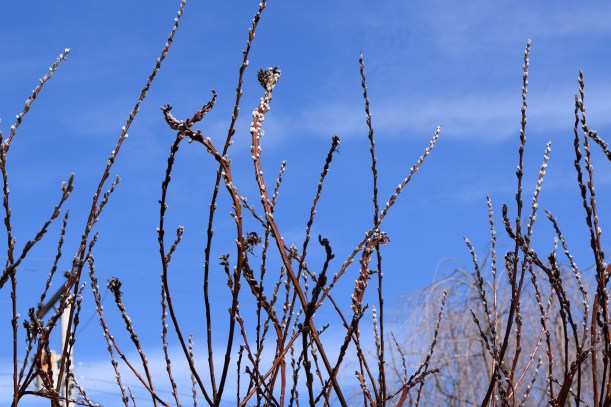
dsc_0087

dsc_0091

I used many in my own home and shared even more with friends and neighbors. They could also be enjoyed on Main Street in Downtown Nashua at Scontsas Fine Jewelry & Home Decor. My friends, Philip and Amalia are both gardeners and used many of the Pussy Willows to decorate their beautiful store, inside and out last spring. (If you visit their store, tell them I sent you – they are regular readers of this blog, too!)

20160503_173632

Pussy Willows for a Decorative Spring Touch at Scontsas Fine Jewelry & Home Decor

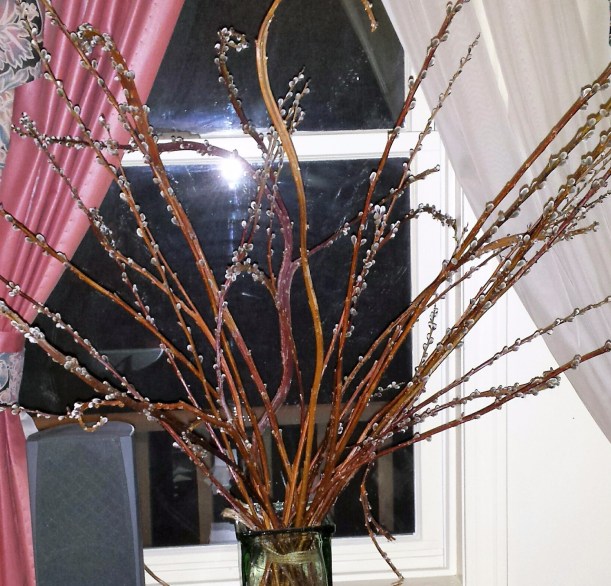
The cut stems, dry and keep their silvery buds when put into dry containers.  For people who want to try to grow their own Pussy Willow shrubs, a little bit of water in the container keeps the branches alive, allowing them to root and eventually transplanted. Here are examples of keeping the branches in dry containers in my home (on the left) and also being enjoyed at Liz’s home (right). Liz was highlighted in the Garden with Grace Blog a few years ago when we Gardened at the Gardner Museum in Boston.

PussyWillows at Home

Pussy Willows in my home

20161106_181214_resized.jpg

Pussy Willows in Liz’s home

As March 2017 arrived, I’ve now CAREFULLY followed a full cycle of the Japanese Fantail Pussy Willow. While it was cut back hard last year, there were still some beautiful curvy branches to cut for decoration – but not nearly the bushels we had in 2016!  dsc_0636I went light on the cutting this year, so that that we can have a larger and more mature bounty in 2018. In late February, I put five branches in water (with a few branches of magnolia and flowering crabapple) to force some early spring flowers in the house. The magnolia bloomed within a week – the crabapple should open within the next few days.

DSC_0649The Japanese Fantail Pussy Willow is already self-rooting and will be planted back into the garden in late May.

The cycle continues.

Special Note: I’ve had this blog – with its clever title – in mind since last spring. But held off on posting because I wanted to highlight a full growing cycle of the gorgeous Japanese Fantail Pussy Willow in our garden. I planned to publish this story in late fall of 2016. Ironically and unfortunately, when I first completed this post, one word in the title was making headlines tied to the US Presidential Election – and honestly, I didn’t want to change it. As a result, I held off to rewrite the ending and finally finished and posted this story in early March 2017!  (I’m sure that some Google searches will unexpectedly bring some search results to this blog since this word is still appearing in news feeds today — for those who found my story this way, thank you for reading until the end!) 


3 Comments

The Power of Patchouli

Patchouli reminds me of Brussels Sprouts or Cilantro. You either love it – or hate it. There’s really no in-between.

Personally, I’ve always been fond of Patchouli, enjoying its fragrance in candles and essential oils. I knew Patchouli came from some exotic plant, but never in my wildest dreams thought about growing it in New Hampshire – until early spring of 2015.

While shopping for container annuals and herbs at Salem’s Lake Street Nursery during the early days of spring, there it was….a tiny 4 inch pot of Patchouli for under $5!

This trip to the nursery was after the record breaking winter of 2015, so there was so much hope for the months ahead – coming across the small Patchouli plant was an unplanned bonus. I had no idea what to do with it – nevertheless, it made its way back to Nashua  to be added as a whimsical item for the 2015 garden.

The young leaves had the fragrance of….well…Patchouli!

It was amazing to touch the leaves, releasing their oils to scent my hands and the air nearby.  It was also fun to show it to garden visitors, by breaking off a piece and asking them to guess what it is. Most people remarked it smelled familiar, but they can’t come up with the plant. Once I tell them, there’s always great discussion on the memories that the Patchouli fragrance evokes. One garden guest immediately shared that it smelled just like our friend, Karen. (She was absolutely right – I never think of Karen without thinking of her signature fragrance!)

By the end of the 2015 growing season, the Patchouli plant was about a foot and a half tall and wide and it seemed a shame to let the October frost claim it. So, an experiment ensued.

I cut the stems off and dried the leaves to create a small dish of Patchouli Potpourri. Within a few weeks, the fragrance from the dried leaves disappeared. After cutting back the plant to the soil level, it was watered well and over-wintered in the basement.  By spring of 2016, the Patchouli plant came back to life and was ready for another growing season in our New Hampshire garden.

dsc_0306

The perfect place in the 2016 garden was under a 30 year old Weeping Cherry tree in the backyard.  By the end of the summer, it turned into a huge shrub – reaching its maximum size of 3′ x 3′. Unfortunately, the growing season was not long enough to allow it to reveal the white flowers I’ve read about when researching Patchouli.

By late September, as the cooler nights started to set in, it was time to do something with the Patchouli. I really wanted to create some essential oil…..so I did.

It was a several week process — I used instructions found online. Since I don’t have the equipment to steam distill the oil, I used the method of infusing the dried leaves in the oil. Basically, you dry the leaves and infused them in a carrier oil. I used organic Sweet Almond Oil.

patchouli-plant-1

Time to cut back the Patchouli

patchouli-cut-plant

The neighborhood Garden Cat supervised the Patchouli Harvest

patchouli-infused

Patchouli after being infused in oil for 2 months. The entire plant fit in one hand.

patchouli-bottling-step

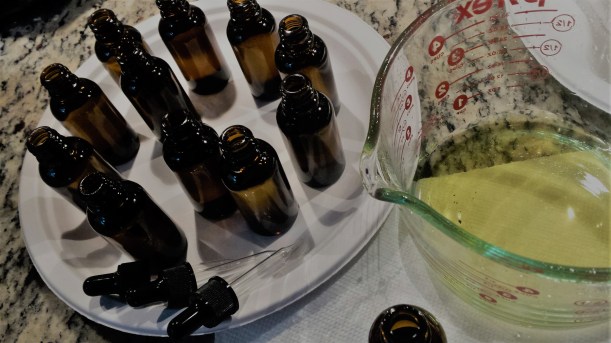
Production line – 12 one ounce bottles!

The jury is still out on the final result.  Personally, the fragrance is light and smells fresh or green – not deep and musky as I expected. Apparently Patchouli Oil improves with time. As it ages, it turns darker and the fragrance grows more potent.

Interestingly, many people are anxious to receive gifts made with plants from my garden. Not true with the Patchouli Oil.  More people than not have kindly said, “Thanks but no thanks.” So my few Patchouli loving friends are part of a longer term experiment to determine if the end product actually improves as it ages – like a fine wine!

In the meantime, I’ve been researching the various uses for the oil beyond it’s powerful fragrance. Among other things, I learned Patchouli Oil has been used for thousands of years and was once considered very valuable, being used as an exchange for gold by early European traders.  One pound of Patchouli for one pound of gold. King Tut even arranged to have 10 gallons of it buried in his tomb!

The history also includes use to scent fabric in the 19th century, to keep moths away, as well as to treat skin maladies and sexual dysfunction.  Today, it’s being used primarily as I expected, as a fragrance. The aromatherapy benefits of Patchouli Oil include anxiety, stress, and depression relief. You can learn more about the history and uses of Patchouli Oil at Mercola’s website.

patchouli-bottled

In the end, my production of Patchouli Oil resulted in 12 ounces of medium-yellow colored oil – to perfectly fill the 12 bottles I ordered for the project.  The label designed for the bottles includes one of the sunflowers from my garden grown during the 2016 season.  It will be interesting to save a bottle or two for a few years to see if the fragrance and color deepen to what I was initially expecting.  Only time will tell.

“Suddenly, I felt like I was wearing Patchouli Oil in a room full of Chanel.”

~ Carrie Bradshaw, Sex and the City


Leave a comment

Find the Seed at the Bottom of Your Heart…

Gerber Daisies are one of my favorite flowers. Being an annual, there’s always a pot of them in the summer garden to add splashes of color among the perennials. That means I get to pick out a new plant each year – and there’s always a bright array of options ranging from red and orange to hot pink. My closest friends know that I can’t resist seeing one of these flowering plants or a bouquet of cut stems without taking a moment or two to absorb their beauty.

Gerbers are a plant that I can usually find at a local grocery store by mid February (Whole Foods in Nashua usually has great ones!) Bringing this live plant into my home during the later part of winter, as the days start to get noticeably longer, gets me excited for the start of the pending gardening season. (Especially on days like today, when the three storms over the past five days bring a fresh accumulation of over 25″ of snow.)

The ritual of adding this annual flower started about 15 years ago with a pot of bright red Gerber Daisies to welcome visitors at the entry to the backyard garden.  The blossoms were about 4-6 inches across were show-stopping as they bloomed all summer. There were always at least three flowers in bloom with as many buds pushing up through the dense soil. I diligently deadheaded the plant to always encourage new growth – until one day I faced a dilemma.

One of the newly emerged buds, on a stem still less than an inch tall, didn’t look like the others. It was very flat and lopsided, as if someone had tightly pinched it. Being close to the end of the growing season, there was only one more bud pushing through the soil. My first thought was to snip the odd bud. I didn’t.

About 10 days later, the most beautiful flower was revealed — a bright red Gerber Daisy with a beautiful, perfect heart center.

heartflower

I pull out this image every year, to share it with friends for Valentine’s Day. It’s a heartfelt reminder to look past perceived imperfections because there may be something perfect inside just waiting to be revealed.

Side Note: I think it’s important to share this factoid, since this is the ‘Garden with Grace’ blog. When Grace, the dog, was in a New Jersey shelter, her name was Gerber before she came to New Hampshire via an animal rescue group.  There were thoughts of adjusting her name to Daisy, keeping the thought of Gerber in place, but since she responded to Grace and arrived on Good Friday, the rest of history. That said, I think of that girl whenever I type the words Gerber Daisy. She had her imperfections too, including scars from years of abuse, but when cared for and loved, she had a perfect heart, too.

“Find the seed at the bottom of your heart and bring forth a flower.”

~ Shigenori Kameoka


1 Comment

Rediscovering Inspiration

It’s that time of year in New Hampshire. The garden is done…hit by multiple freezes over the past week. I spent this morning in the garage and potting room organizing tools, putting away hummingbird feeders, and just looking around to see what could be salvaged or recycled for 2016 and what will no longer make it through another gardening season.

The Garden Cat, who continues to stalk me, found that I was in the potting room at the back of the garage, so he joined me for a while…he settled into the perfect spot to look over the spent garden to keep an eye out for chipmunks.

20151025_112138After I finished my “chores” I took some time to browse through the “Garden Library” in the corner of the potting room. It’s an eclectic mix of gardening guides and books collected over several decades by multiple generations of family gardeners. Some are gifts from friends, as well. This special library is stored in old wood crates, including one from Producer’s Dairy in Nashua.

20151025_111717

Today, my eye was drawn to one of my all-time favorite books by Adelma Simmons. I met her in 1993 at her farm/garden that was known as Caprilands in Coventry, Connecticut.

20151025_111914

At that time, I had a fascination with herb gardening and my visit to Caprilands turned that fascination into what is now a lifetime obsession. She signed this book for me 22 years ago this month.

20151025_111934

A lot has changed since that visit to Connecticut. Ms. Simmons passed away in 1997 and her herbal paradise is no longer open to the public. You can read more about her via this link.

The one thing that is unchanged is my obsession of growing and using herbs for culinary, mixology, and aromatherapy purposes.

I loved rediscovering this gem of a book today and remembering back to the day that I visited Caprilands in October 1993. I look forward to reading “Gardens of Delight” again to find renewed inspiration for the 2016 garden. (Thank you Adelma! )


1 Comment

Autumn Surprise

While I dread the end of the summer, there’s always a surprise in the garden in autumn.

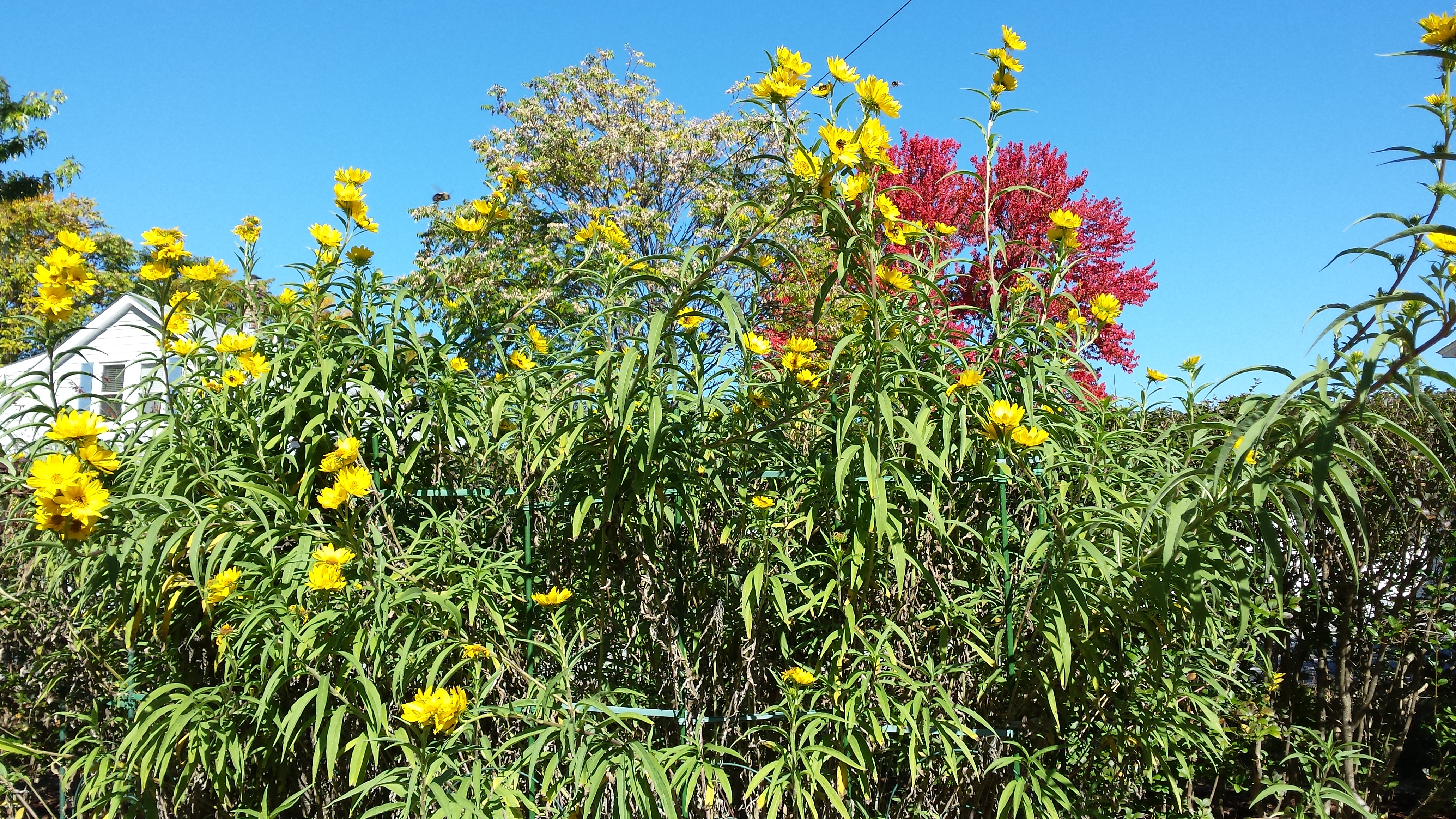
This year, the surprise was late – the Maximillian (or New Mexican) Sunflowers.  These have been in the garden for over a decade, started from seed and over the years have been shared with friends across New England. As I write this, I’m reminded that a clump of them will be travelling this weekend to a special garden of an artist friend in Weare, NH.

20151015_113225 (1)

Not your typical sunflowers, these look ‘weedy’ all summer, until they start to bloom in late September.  This year, the bloom didn’t start until mid October – just in time for the frost that is expected this weekend.  There’s nothing more refreshing than a bright burst of yellow in the garden as everything else is ready to come to an end.

Mother Nature is magical!


Leave a comment

Fuller Gardens: A Fragrant, Rose Lover’s Paradise

I’ve spent so much time in my own garden this summer, that it was a treat to visit someone else’s last week!

I could have not have picked a better evening than last Wednesday to visit Fuller Gardens in North Hampton, NH. It was the night of their Annual Garden (and Art) Party!

A long time Granite State resident and frequent visitor to our 13 mile seacoast, I’ve passed the sign for this well-known NH garden hundreds of times over the past few decades, but never turned off of Route 1-A for a visit.

The property is within view of the Atlantic Ocean, among the sprawling estates that line the narrow and curvy road along NH’s scenic seacoast. I was a guest of my friend, Bobbi, who is a new resident of this area – she’s also a long-time gardening friend. Plants from each of our gardens have been shared with one another and our families for many years. This was Bobbi’s first visit to Fuller Gardens, too.

We were both in awe of the rose gardens that include 125 varieties and 1700 bushes. Immediately, we noticed that the roses in our own gardens aren’t planted like the ones at Fuller Gardens. Neither of us mound the soil around the crowns of our own rose bushes.

The beauty all around us was almost overwhelming. Right away, we found the path that lined the area of the David Austin roses. The fragrance enveloped the area — there’s no better scent than that of rose mixed with the misty sea air (if it were bottled, I’d buy it all!)

There were hundreds of people at this garden soiree. But, I didn’t notice until I looked through my photos the next day that I captured a moment when the gardens appeared to be quiet and lonely. The reality is that the air was not only filled with the fragrance of salt air and roses, but also with the sounds of jazz and people laughing and talking, and ooohing and ahhhing! Only one of the artists (and none of the party-goers) was in what is now my favorite photo from that evening. Several artists from across the region were sprawled around the property, all painting their own beautiful interpretations of the gardens.

Garden2015-FullerThis is how I will always remember Fuller Gardens. Serene, fragrant, and overwhelmingly beautiful.

While the estate also features a gorgeous Japanese Garden, Conservatory, and English Perennial Garden, Fuller Gardens is definitely a rose lover’s paradise. It is now at the top of my list of “must-visit” places for people who travel to and through New Hampshire.

I can’t wait to go back! (And tend to the roses in my own garden a little bit better!)


Leave a comment

Pussycat, Pussycat, Where have you been?

As plants in the garden evolve and change over the years, so has the collection of “Garden Cats” that have taken ownership of my property. It’s funny, because not one of the “Garden Cats” of the past 20 years has belonged to me!

There are too many to mention, but some of the favorites are remembered in a collage in my potting shed.

L-R clockwise: Momma Cat, Cuddles, Bradley, Peppermint. (Momma Cat is the only one still living at 19 yrs old!)

L-R clockwise: Momma Cat, Cuddles, Bradley, Peppermint. (Momma Cat is the only one still living at 19 yrs old!)

For about 10 years, a long haired black cat with bright green eyes has visited the garden somewhat regularly. He’s always been shy, until this year’s gardening season started. His name is Oreo and his owners live a few houses away. Oreo prefers to be an outdoor cat and can be seen here and there and everywhere around the neighborhood.

When Grace was still with us, Oreo would watch intently as we’d walk by, always staying out of her sight (Grace was a big dog!), but I’d always see him peering around corners or from under bushes nearby.  I think that he realizes that there’s no longer a dog at my house.

This was especially evident today. Oreo’s ‘cattitude’ was in full force. Everytime I looked out the window, or walked outside, there he was, taking ownership of the garden.  He especially loves being near the Wine & Roses Wiegela (it seems to be an aphrodisiac for cats when the pink flowers are in bloom, similar to a kiwi vine that was in the garden a few years ago!)

20150603_182730

Oreo resting near the Wine & Roses Wiegela today.

Of course, he’s interested in the Catmint too, but I think that’s due to the fact that the chipmunks have a path nearby.

Oreo enjoying the view (and fragrance of the Catmint flowers in bloom!)

Oreo enjoying the view (and fragrance of the Catmint flowers in bloom!)

I never thought I’d blog about cats. I’m allergic to them. I don’t own any. And, I’ve always been a ‘dog-person’ as is evident by the premise on which this blog was created a few years ago.

However, I do enjoy the company of my “Garden Cats.”  And as any cat-person would tell you, you don’t own them. They own you! In this case, I feel honored that Oreo, and all the other “Garden Cats” of the past two decades, have selected to take ownership of such a special place (and of course, me!)

Just as “Good Queen Bess”, (who inspired the nursery rhyme ‘Pussycat, Pussycat’) decreed that an old cat could wander around her throne room as long as it got rid of mice, I allow the old (and young) cats to wander the garden as long as they do the same! Meoww!


1 Comment

Observing ‘the Risk to Blossom’ Today

The weather in New England, specifically where I live, in southern New Hampshire (NH) has forced me to follow my calendar this year. This fall, the garden continues to offer daily surprises, even though we’re well in to November and just over a month away from the Winter Solstice.

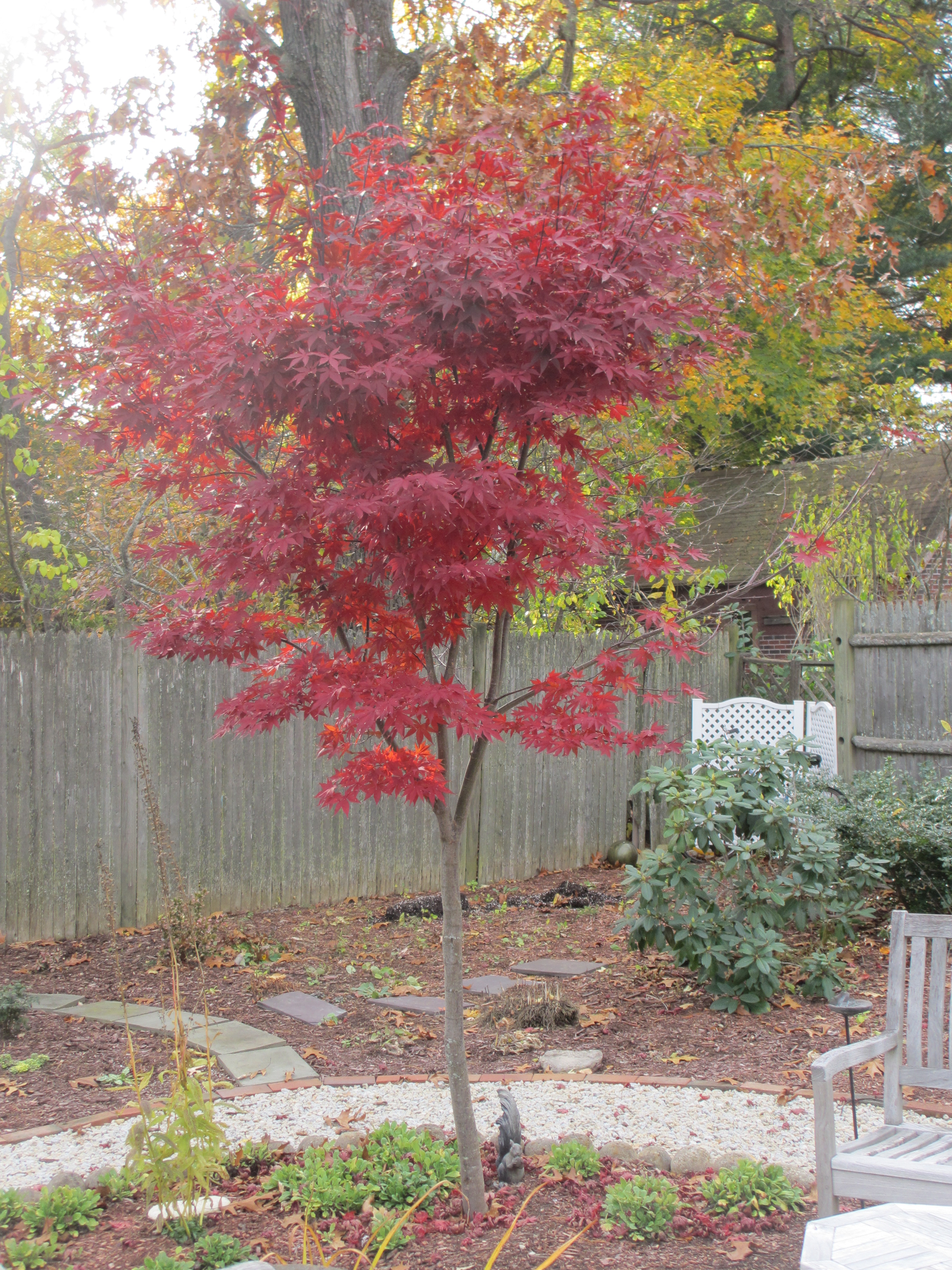
We’ve had a spectacular foliage season in NH – lots of red, orange, and yellow to decorate the landscape. This Japanese Maple is a good example of the bright colors:

IMG_5130

Typically, the 7-10 days after Halloween is a big leaf raking/blowing week.  We’re fortunate in Nashua to have curb-side pickup of soft yard waste until the end of November.  In past years, the leaves were blown/raked, shredded, and either put to the curb or added to the compost bin by now.

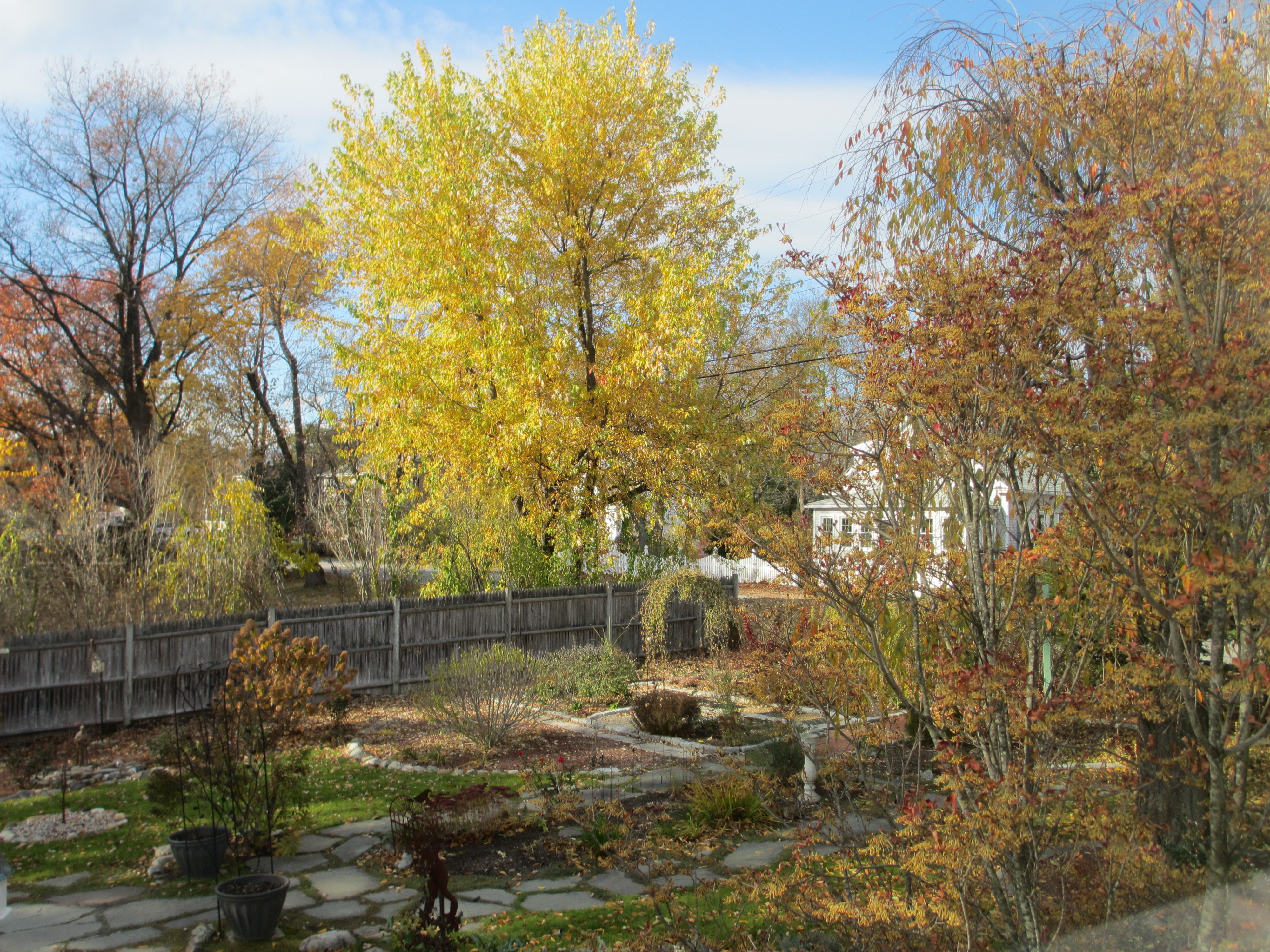
Today, I looked out of the window.  If I didn’t know better, I’d thought it was a beautiful mid-October day.

IMG_5137

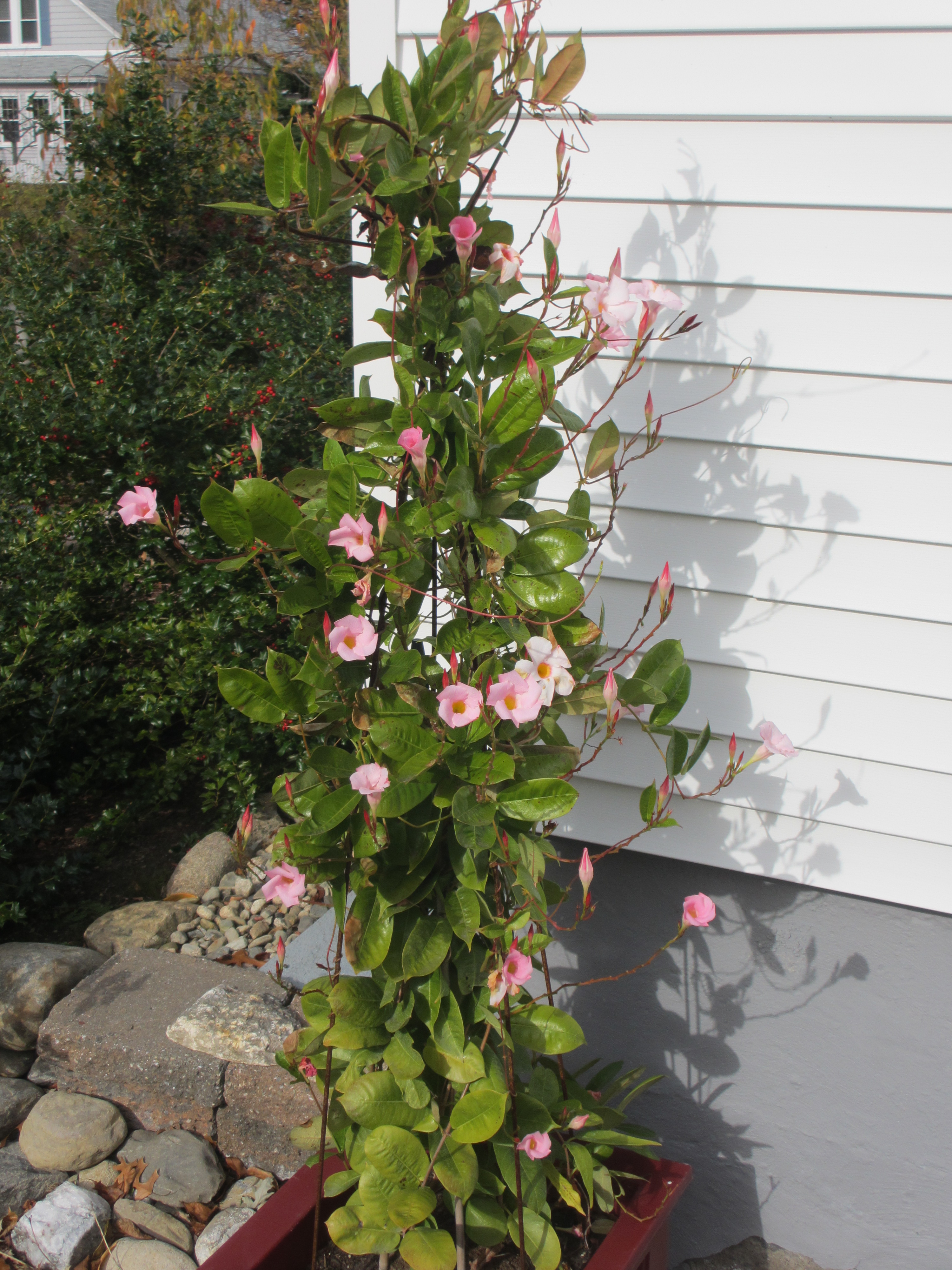
Not only have the leaves refused to fall, but some of the flowers in the garden are still blooming as though it were still late summer. Most unusual is when I look out to the back patio and see that the Mandevilla is still looking great! I’ve never had one of these plants last in my garden/yard past mid September because even the smallest touch of frost kills this tropical plant in an instant.

IMG_5126

While there has been a chill in the air the past 6 weeks,  we’ve yet to have a hard freeze.  What a treat it was to walk thru the garden and find some surprises on November 9!  Typically, the Hollyhocks bloom mid-late summer.  This one got wrapped into the Morning Glories. While the Glories are not so glorious anymore, there’s still one last bloom being pushed out by the Hollyhock. I can actually see it from across the yard while looking out of my home-office window.

IMG_5132

Weeks ago, I thought I had seen the ‘last rose of summer’. Maybe I did and these are ‘the last roses of autumn’? If they stick it out, they could be the first roses of winter.

IMG_5131

Also paying a surprise visit today were the ‘Pinks’ aka: Dianthus and the ‘Indian Blanket’ aka: Gaillardia.

IMG_5134


IMG_5136

Isn’t Mother Nature incredible? She definitely has a plan.

It makes me wonder if these flowers in the garden today were late bloomers or perhaps they are the best example of Anais Nin’s quote that has always been an inspiration to me in early spring:

“And the day came when the risk to remain tight in a bud was more painful than the risk it took to blossom.”


4 Comments

28 Day Transformation of a Sad Sod Situation

Of all of the perennial plants in the garden, growing a lush, green lawn has been the most challenging over the years.  When my grandfather was alive, maintaining the perfect lawn was his obsession.  The entire yard consisted of a moderate sized vegetable garden and the greenest, weed-free lawn in the neighborhood, if not the entire City of Nashua.

As the years have gone by, the lush lawn has evolved into large perennial gardens of local plants and flowers, most of them drought and deer resistant. However, there are two areas of the backyard with grass — each about the size of a putting green.  The paths through the gardens wind around these patches of lawn.

After the removal of an old, dying cherry tree about 7 years ago, the grass just wasn’t doing well while the tree’s roots rotted. As a result it was replaced with fresh loam and sod (about 6 years ago).

It looked beautiful, but without an irrigation system, it required a lot of water. Yes, so much water that that the first water bill of that summer was outrageously obscene. Thankfully, the investment resulted in lush, beautiful grass until the oak tree abutting my property that gave nice shade was removed last summer.

Like the cherry removed a few years earlier, it was a dying, large, old tree. It was dropping 10+ foot branches and was a hazard to the neighbor’s home and the fence on our property line. The tree became more of a concern after the dangerous, late October storms 2 years in a row – the Halloween Snowstorm and Hurricane Sandy.

The removal of the oak in the late spring of 2013 dramatically changed the sunlight across the entire garden. Overall, the evolution to a full sun area was good (actually great!) for the majority of the garden.

Except for the sod.

A Sad Sod Situation (with apologies to Sir Elton John!)

Over the past two summers, the soft, lush, green lawn turned into a brown, crunchy mess (the only green to survive consisted of weeds, which actually did very well this past summer.)  Oh, yes, it was the sun scorching the grass, but also the fact that I over fertilized in the fall of 2013 added an extra ingredient for disaster.  This is my best of life experience example that supports the idiom that “Too much of a good thing can be bad.”IMG_4877

After some research and a little desperation (for a few days, I considered buying that “As Seen on TV” product called Hydro Mousse!), the reality hit that the dead sod needed to just be removed and a new lawn had to be planted.  Timing was perfect for this late August decision because fall is the best time to plant a lawn and focus on caring for grass.

Hope is on the Way

On September 4, a landscaper started the project. In an hour, he and his crew removed what was left of the old, dead sod. On September 5, he stopped by for another hour and spread fresh, new loam.  Then, on the morning of September 6, the Tall Fescue grass seed was planted. He actually planted 2 layers of it.

Within a week, little tints of green stated to appear.  Within 2 weeks, the areas of new grass started to show real life.  At 3 weeks, it was time to a quick mow! September was cool but dry in Nashua, so the new grass was watered 2x a day for 3 weeks. (The September water bill has not yet arrived!)

Finally…..It’s Good to Touch the Green, Green Grass of Home

Today, marks week 4.  I’m just amazed at the transformation that has occurred in 28 days.IMG_4978

There are still some small open patches that will be tended to in the spring, but the grass is once again soft, lush, and green.

It’s the kind of lawn that makes you want to kick off your shoes and walk barefoot across. Exactly like you’d expect of the green, green grass of home.


Leave a comment

When the Garden Gives You Lemons, Make Lemon Drop Cocktails!

At the start of this year, I shared the story about the pink lemon tree acquired in October 2013.

We’ve waited for months for the first lemon to be ready to pick (almost a full year, actually), only to see hundreds of tiny lemons, barely the size of peas, fall to the ground during 3-4 growth cycles. While that may seem discouraging to some people, this plant has been enjoyed even without fruit for months, indoors and out.  Its tiny white and purple flowers are extremely fragrant, as is the beautiful, shiny, variegated foliage. When it isn’t indoors filling the garden room with lemon perfume, it’s outdoors bringing delight to the honeybees.

By late May, the pink lemon tree was moved from the garden room indoors to the back patio where it enjoyed outdoor living for 3 full months.  However, with the temperatures expected to drop into the 40’s (F) in New Hampshire tonight, it is time to bring this beauty indoors during the overnight hours

But, before that happens, we needed to pick a lemon. Today, the first lemon was harvested! The pink lemon variety never really turns completely yellow – it’s a creamy yellow color with green stripes. The fruit size is small, more like a lime or golf ball.

IMG_4913

A lot of thought went into what to do with this lemon – we really wanted to be able to taste its lemony flavor, but with only one lemon, there’d be hardly enough juice for even a thimble-full of lemonade.  The truth is that I didn’t care what the end offering would be, I just wanted to cut open the fruit to see its pink flesh.  It looked a little more salmon color than bright pink – and was beautiful.

IMG_4916

When you grow your own lemons, you enjoy fruit that is not covered in wax because it was shipped to your market from thousands of miles away.  Instead, the outside of the lemon rendered a big spray of oil when it was cut and then squeezed.

Thankfully, if you have vodka in the house, you can skip the lemonade and go right for a lemon cocktail.  I did a quick search online to find a recipe that only needed a few ingredients and Ina Garten offered the solution. Her recipe for a Lemon Drop cocktail was perfect – I simply cut the ingredient portions in half for my one, lonely lemon.

Voila! The most delicious Lemon Drop Cocktail that took nearly a year to make!

IMG_4917Cheers! And, here’s to the remaining 4 lemons that should be ready in as many weeks. If you have suggestions on how I should plan to use them, let me know via a comment!