Garden with Grace

"I hope that while so many people are out smelling the flowers, someone is taking the time to plant some." ~H.Rappaport


3 Comments

The Power of Patchouli

Patchouli reminds me of Brussels Sprouts or Cilantro. You either love it – or hate it. There’s really no in-between.

Personally, I’ve always been fond of Patchouli, enjoying its fragrance in candles and essential oils. I knew Patchouli came from some exotic plant, but never in my wildest dreams thought about growing it in New Hampshire – until early spring of 2015.

While shopping for container annuals and herbs at Salem’s Lake Street Nursery during the early days of spring, there it was….a tiny 4 inch pot of Patchouli for under $5!

This trip to the nursery was after the record breaking winter of 2015, so there was so much hope for the months ahead – coming across the small Patchouli plant was an unplanned bonus. I had no idea what to do with it – nevertheless, it made its way back to Nashua  to be added as a whimsical item for the 2015 garden.

The young leaves had the fragrance of….well…Patchouli!

It was amazing to touch the leaves, releasing their oils to scent my hands and the air nearby.  It was also fun to show it to garden visitors, by breaking off a piece and asking them to guess what it is. Most people remarked it smelled familiar, but they can’t come up with the plant. Once I tell them, there’s always great discussion on the memories that the Patchouli fragrance evokes. One garden guest immediately shared that it smelled just like our friend, Karen. (She was absolutely right – I never think of Karen without thinking of her signature fragrance!)

By the end of the 2015 growing season, the Patchouli plant was about a foot and a half tall and wide and it seemed a shame to let the October frost claim it. So, an experiment ensued.

I cut the stems off and dried the leaves to create a small dish of Patchouli Potpourri. Within a few weeks, the fragrance from the dried leaves disappeared. After cutting back the plant to the soil level, it was watered well and over-wintered in the basement.  By spring of 2016, the Patchouli plant came back to life and was ready for another growing season in our New Hampshire garden.

dsc_0306

The perfect place in the 2016 garden was under a 30 year old Weeping Cherry tree in the backyard.  By the end of the summer, it turned into a huge shrub – reaching its maximum size of 3′ x 3′. Unfortunately, the growing season was not long enough to allow it to reveal the white flowers I’ve read about when researching Patchouli.

By late September, as the cooler nights started to set in, it was time to do something with the Patchouli. I really wanted to create some essential oil…..so I did.

It was a several week process — I used instructions found online. Since I don’t have the equipment to steam distill the oil, I used the method of infusing the dried leaves in the oil. Basically, you dry the leaves and infused them in a carrier oil. I used organic Sweet Almond Oil.

patchouli-plant-1

Time to cut back the Patchouli

patchouli-cut-plant

The neighborhood Garden Cat supervised the Patchouli Harvest

patchouli-infused

Patchouli after being infused in oil for 2 months. The entire plant fit in one hand.
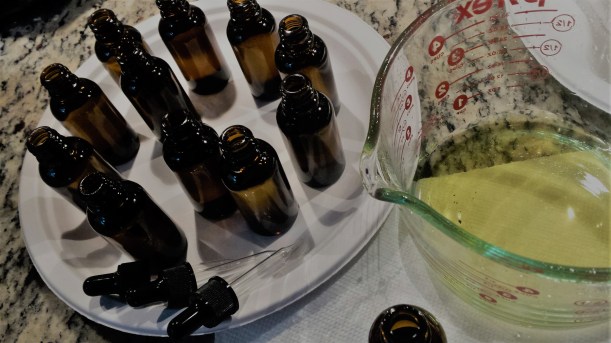
patchouli-bottling-step

Production line – 12 one ounce bottles!

The jury is still out on the final result.  Personally, the fragrance is light and smells fresh or green – not deep and musky as I expected. Apparently Patchouli Oil improves with time. As it ages, it turns darker and the fragrance grows more potent.

Interestingly, many people are anxious to receive gifts made with plants from my garden. Not true with the Patchouli Oil.  More people than not have kindly said, “Thanks but no thanks.” So my few Patchouli loving friends are part of a longer term experiment to determine if the end product actually improves as it ages – like a fine wine!

In the meantime, I’ve been researching the various uses for the oil beyond it’s powerful fragrance. Among other things, I learned Patchouli Oil has been used for thousands of years and was once considered very valuable, being used as an exchange for gold by early European traders.  One pound of Patchouli for one pound of gold. King Tut even arranged to have 10 gallons of it buried in his tomb!

The history also includes use to scent fabric in the 19th century, to keep moths away, as well as to treat skin maladies and sexual dysfunction.  Today, it’s being used primarily as I expected, as a fragrance. The aromatherapy benefits of Patchouli Oil include anxiety, stress, and depression relief. You can learn more about the history and uses of Patchouli Oil at Mercola’s website.

patchouli-bottled

In the end, my production of Patchouli Oil resulted in 12 ounces of medium-yellow colored oil – to perfectly fill the 12 bottles I ordered for the project.  The label designed for the bottles includes one of the sunflowers from my garden grown during the 2016 season.  It will be interesting to save a bottle or two for a few years to see if the fragrance and color deepen to what I was initially expecting.  Only time will tell.

“Suddenly, I felt like I was wearing Patchouli Oil in a room full of Chanel.”

~ Carrie Bradshaw, Sex and the City


Leave a comment

Find the Seed at the Bottom of Your Heart…

Gerber Daisies are one of my favorite flowers. Being an annual, there’s always a pot of them in the summer garden to add splashes of color among the perennials. That means I get to pick out a new plant each year – and there’s always a bright array of options ranging from red and orange to hot pink. My closest friends know that I can’t resist seeing one of these flowering plants or a bouquet of cut stems without taking a moment or two to absorb their beauty.

Gerbers are a plant that I can usually find at a local grocery store by mid February (Whole Foods in Nashua usually has great ones!) Bringing this live plant into my home during the later part of winter, as the days start to get noticeably longer, gets me excited for the start of the pending gardening season. (Especially on days like today, when the three storms over the past five days bring a fresh accumulation of over 25″ of snow.)

The ritual of adding this annual flower started about 15 years ago with a pot of bright red Gerber Daisies to welcome visitors at the entry to the backyard garden.  The blossoms were about 4-6 inches across were show-stopping as they bloomed all summer. There were always at least three flowers in bloom with as many buds pushing up through the dense soil. I diligently deadheaded the plant to always encourage new growth – until one day I faced a dilemma.

One of the newly emerged buds, on a stem still less than an inch tall, didn’t look like the others. It was very flat and lopsided, as if someone had tightly pinched it. Being close to the end of the growing season, there was only one more bud pushing through the soil. My first thought was to snip the odd bud. I didn’t.

About 10 days later, the most beautiful flower was revealed — a bright red Gerber Daisy with a beautiful, perfect heart center.

heartflower

I pull out this image every year, to share it with friends for Valentine’s Day. It’s a heartfelt reminder to look past perceived imperfections because there may be something perfect inside just waiting to be revealed.

Side Note: I think it’s important to share this factoid, since this is the ‘Garden with Grace’ blog. When Grace, the dog, was in a New Jersey shelter, her name was Gerber before she came to New Hampshire via an animal rescue group.  There were thoughts of adjusting her name to Daisy, keeping the thought of Gerber in place, but since she responded to Grace and arrived on Good Friday, the rest of history. That said, I think of that girl whenever I type the words Gerber Daisy. She had her imperfections too, including scars from years of abuse, but when cared for and loved, she had a perfect heart, too.

“Find the seed at the bottom of your heart and bring forth a flower.”

~ Shigenori Kameoka


1 Comment

Keep Your Face to the Sunshine…

There is always so much hope when seeds are planted  in late spring.

Especially sunflower seeds.

We look forward to their golden petals all summer, while at the same time, know that their arrival signals the transition to shorter days and the autumn season.

The New England weather challenged backyard gardeners all summer long as severe to extreme drought conditions gripped the region. (We lost our little bit of lawn — again — yes, that ‘Sad Sod Situation’ continues to be a challenge – but we’ll discuss that in another post someday.)

Beginning in  June, we watched the sunflowers struggle.  The dozen or so inch-high seedlings were a much sought after ‘garden buffet’ delicacy for this year’s over abundance of chipmunks and squirrels. In the end, we were able to grow a TWO eight foot tall sunflowers that became a stunning, late early autumn focal point, adding much-needed color to the garden. (Even the hydrangea failed to bloom due to the challenge of changing climate conditions.)

dsc_0395

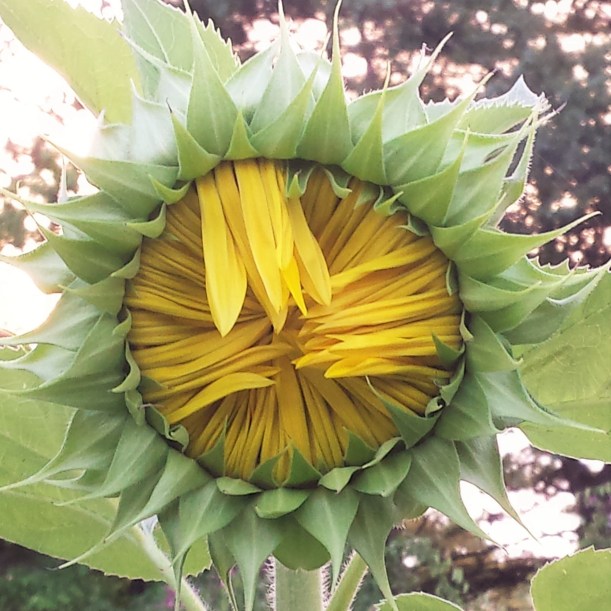
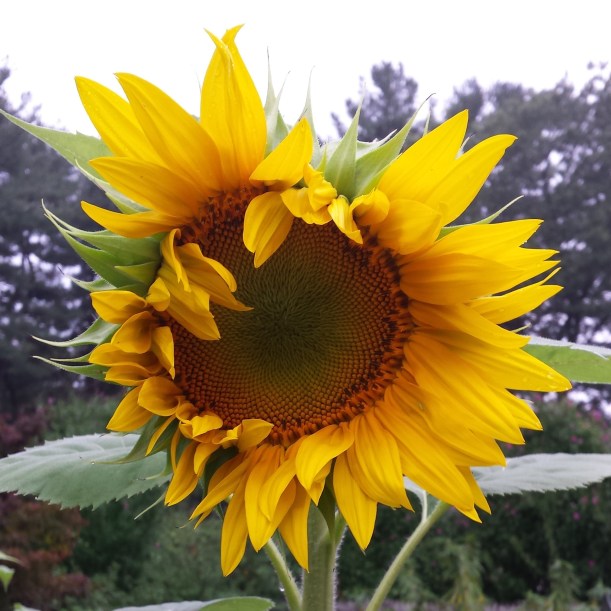
It was amazing to watch the single large flower on each stem slowly open and come to life over the course of four days.

20160907_171949.jpg

Day 1 – Ready to Burst

20160908_175742

Day 2 – Time to Wake Up

sunflower-almost-open

Day 3 – Almost There

sunflower-day-3-2

Day 4 – Hello Sunshine!

HELLO SUNSHINE!

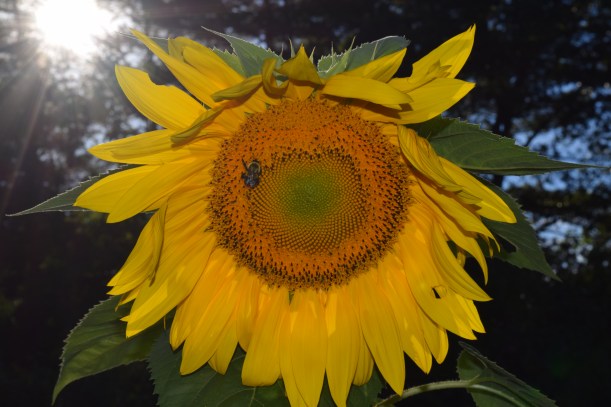
Once each flower opened, the bees quickly began their pollination process.  It was amazing to watch the bumble bees AND honey bees over the course of about 10 days navigate around and around the flowers’ centers to pollinate and bring the sunflower seeds to life.

dsc_0400

20160914_095852.jpg

As the seed head grew bigger and heavier each day, I was looking forward to harvesting some of the seeds to save for the 2017 garden. The plan was to leave the majority of the seeds for the songbirds to enjoy.

THEN THIS HAPPENED!

squirrel

20160923_121505

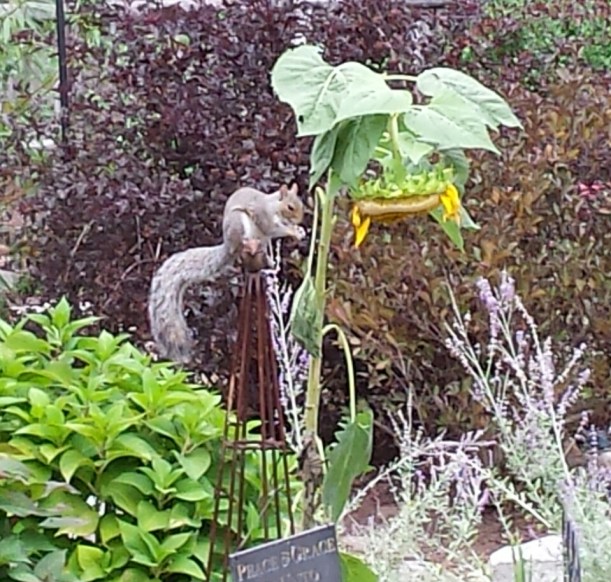
A squirrel used a nearby trellis as a ladder to reach the seeds.  Fresh sunflower seeds became another menu item in the backyard garden buffet. Delicious!

20160922_125048

20160922_173350

The seed head continued to swell for a few more days and approximately three weeks after the flower first began to show its sunny face, its head bowed deeply toward the earth as autumn set in.  By day 30, the squirrel came back, hungry and in full force, to strip the seeds row by row – creating an interesting pattern.

20160924_082226

Second to peonies, sunflowers have always been one of my favorite flowers (lavender would round out the top three.)  After enjoying hundreds of sunflowers from self-sown seeds in the Greeley Park Community Gardens a few years ago, it was gratifying to grow sunflowers in our own backyard garden this summer. Perhaps in 2017, we’ll double our crop …. and raise four of them!

This feeling of optimism that sunflowers bring must be part of the story behind the Helen Keller quote that inspired me to share the story of our 2016 sunflower success:

“Keep your face to the sunshine and you cannot see the shadows. 

 It’s what the sunflowers do.” ~Helen Keller


1 Comment

Red Solo Cup, I Fill You Up…Let’s Have a (Garden) Party

(I’ve edited the title of this blog thanks to the inspiration of my friend Liz…and Toby Keith)

Over the years, I’ve enjoyed the promise of a new gardening season by starting a few seeds in my house in early to mid March. Usually one or two varieties of tomatoes and hot peppers, along with a culinary herb or two thrown in (most often basil or cilantro.)

Seven years ago, that annual feeling of promise turned my gardening hobby into a full-blown commitment! A Costco-sized package of Red Solo Cups, that would have been more appropriate for a college keg party, became my new favorite gardening tool in 2009. Using an icepick, I carefully poked three holes for drainage in the bottom of every one….that in itself took over an hour!

FB_IMG_1459601989890A variety of organic seeds were ordered online and a new shelf for warming trays and adjustable grow lights that were stored in the basement, transformed my little sun porch into a tiny green house. By early May, I had over 100 plants ready for my garden (and all my friends’ gardens!)

By Memorial Day, the seedlings were outside in their summer containers and garden beds.

In August, we enjoyed the fruits of our nearly six months of labor. Of all the heirloom tomatoes, the Black Krim were the hands-down favorite with Brandywine being a close second.

It’s been seven years since I’ve started seedlings indoors in late winter. While I really do enjoy the ritual of researching new seeds to plant, I’ve been leaving that part of my gardening process to local nurseries and greenhouses in recent years.

Today, after I fell across the 2009 photo with all the Red Solo Cups, I admit that I had a sudden urge to pick up a bag of potting soil while I stocked up on woodpecker suet cakes at the Nashua Farmer’s Exchange this afternoon. I let the urge pass, and will save my impulse buys for my first visit to the local greenhouse in early May.


Leave a comment

A 70’s theme…March 2015 vs March 2016

In March 2015, there was 70+ inches of snow on the ground after a historical/hysterical winter in New England.

One year later, March 2016 arrived with NO SNOW on the ground. And this week, the mercury on the thermometer hit 77 degrees! On my morning garden walk, I noticed that the soil is raised and cracked in the garden beds, indicating that the plants deep below are waking up to reach up for some sunshine.


MarchCrocus

Crocus pushing thru the mini white iris patch.

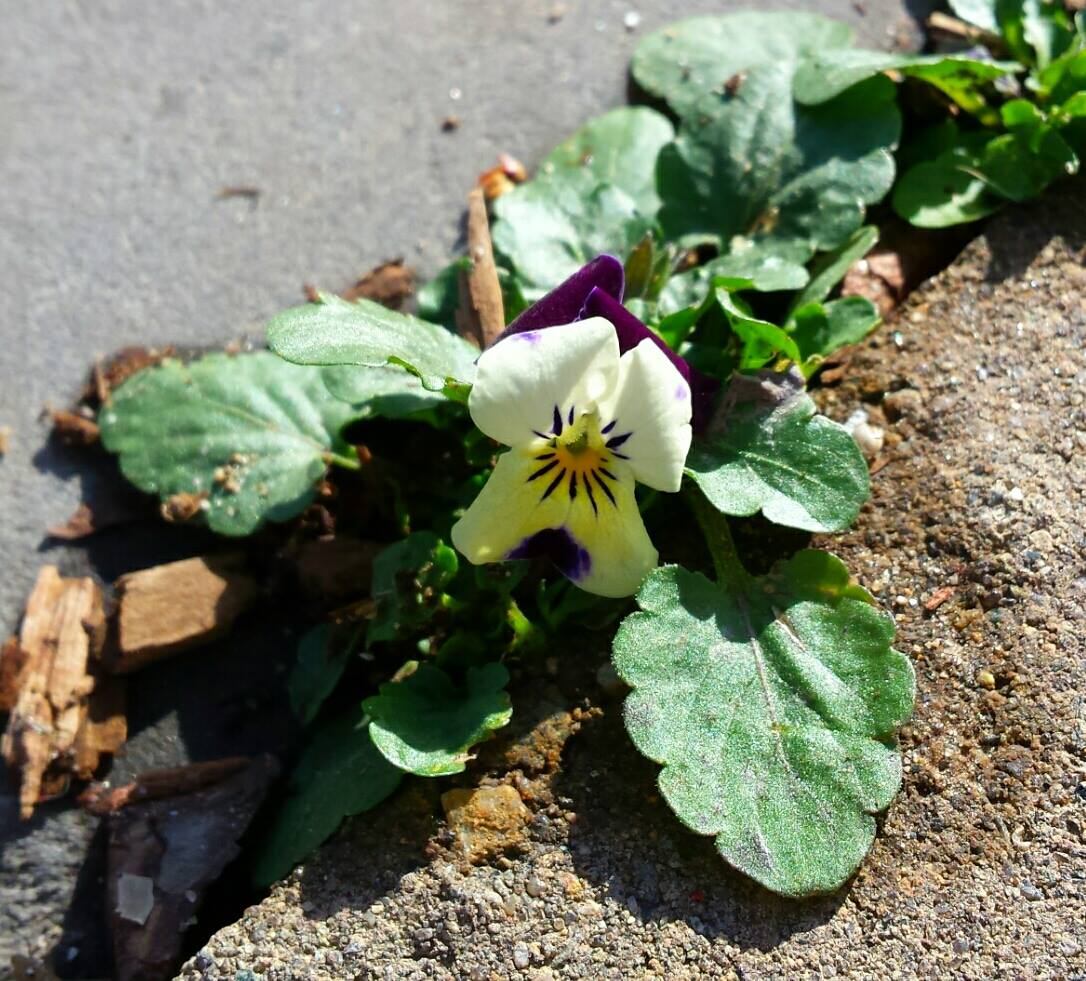
MarchPansies

Pansies – Between a rock and a hard place.

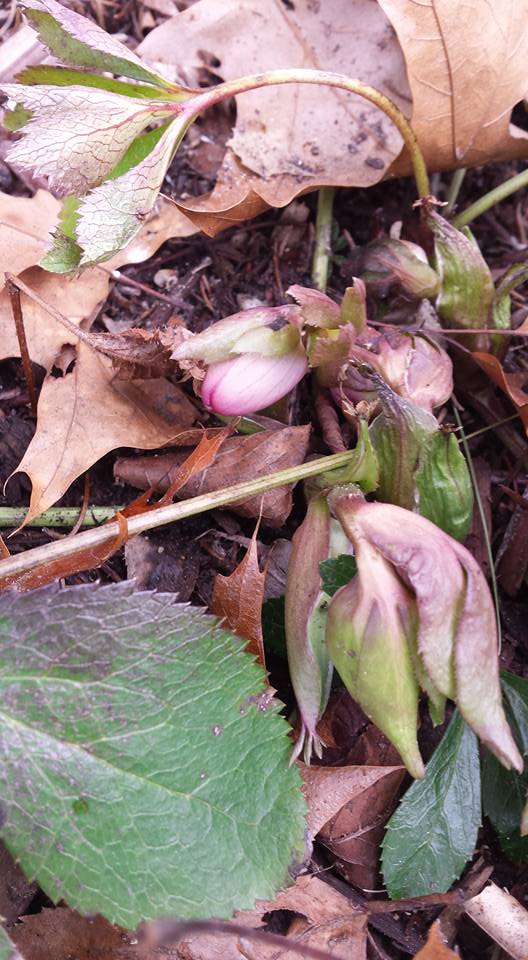
MarchHellebores

Hellebores aka: Lenten Rose showing their colors 3 weeks before Easter.

Today, I discovered yellow and purple crocus, purple pansies (near the ones blooming this past Christmas), and the soft pink petals of the hellebore flowers (aka: Lenten Rose).

The birds were out, singing and filling their little wood and metal houses around the garden with organic matter to build up their nests.  And the cloudy air had the fragrance of rain. (If that scent could be bottled, it would make the most exquisite perfume!)

The sights, sounds, and smells of a new season, arriving a few weeks early are welcome to this anxious gardener.  Hello again, spring – it’s so nice to have you back!


1 Comment

Gardening Epiphany

The post-gardening months of November and December were remarkable as 2015 came to a close.  It was unusally warm as autumn transitioned into winter.  And, for the first time that I can remember, the outdoor water spigots were still open on December 31st. (I just shut them off this week vs. the standard ritual of this happening by Thanksgiving weekend.)

Either Mother Nature was offering penance for last winter’s historic snowfall in New Hampshire, or she was just resting up for the coming New Year.

Most notable as the year ended, an amazing sight appeared on Christmas Day. Mother Nature offered the gift of a single viola (Johnny Jump Up) blossom in an area of the garden that is literally ‘between a rock and a hard place’. The honeysuckle on the back trellis pushed out a few orange-pink blooms, as well. It was a sunny, warm day on December 25th (the First Day of Christmas!) So warm in fact, the furnace was off for the day and the windows and doors had to be opened…..oh, and yes,  the flowers were blooming!

ChristmasPansy-2015

It was so different from Christmas Days past when it was almost impossible to go outside with temperatures in the single digits. But as always in New England, you just need to wait for a moment (or two) and everything changes.  Snow and ice finally arrived four days later and the garden is now under a soft white blanket to sleep for the next few weeks.

WinterBlanket

Don’t let a sleeping garden fool you.  Now is the most exciting time of the year for this garden blogger.  January is the month when I find that gardening activities are the most focused and important.

I browse the hundreds of photos that I’ve taken over the past season and make notes of what needs to be moved and removed. And this year, I’m adding the best photos from the season to my new Garden with Grace on Instagram page to complement this blog.

I flip through catalogues that still arrive by mail in January and February to see what is marked “NEW!” for 2016.

I read old gardening books and journals that are stored in my potting shed.  And this year, I’m reading a new book (a thoughtful Christmas gift from my friend Liz) that is a fascinating guide, called Wicked Plants: The Weed that Killed Lincoln’s Mother & Other Botanical Atrocities

I confer with my mother (my gardening mentor and co-gardener!) about plans for the coming spring. Our discussions over the past few years always involve the same three basic questions:

  1. Should we start some things from seed? (No. Not after that time in 2009 when we ended up with nearly 200 red solo cups of seedlings in our sun/garden room.)
  2. Will we order any special or “NEW!” plants to add to the landscape? (No. Let’s mark what we want from the catalogues and patronize local nurseries in the spring, instead.)
  3. What are we going to do with the two areas of grass that died again? (Don’t know yet. But the grass from my Sad Sod Situation story, just over a year ago needs attention again!)

These questions will no doubt be brought up in the coming weeks (usually during an evening ritual that my grandfather called ‘Coffee Break’. Others call it Cocktail Hour!) No matter the season or time of year, gardening is a 365 day obsession in my home.

So here it is, my 2016 Gardening Epiphany that arrived on January 6, the 12th Day of Christmas: You can take the Gardener of out of the Garden, but you can never take the Garden out of the Gardener.


1 Comment

Rediscovering Inspiration

It’s that time of year in New Hampshire. The garden is done…hit by multiple freezes over the past week. I spent this morning in the garage and potting room organizing tools, putting away hummingbird feeders, and just looking around to see what could be salvaged or recycled for 2016 and what will no longer make it through another gardening season.

The Garden Cat, who continues to stalk me, found that I was in the potting room at the back of the garage, so he joined me for a while…he settled into the perfect spot to look over the spent garden to keep an eye out for chipmunks.

20151025_112138After I finished my “chores” I took some time to browse through the “Garden Library” in the corner of the potting room. It’s an eclectic mix of gardening guides and books collected over several decades by multiple generations of family gardeners. Some are gifts from friends, as well. This special library is stored in old wood crates, including one from Producer’s Dairy in Nashua.

20151025_111717

Today, my eye was drawn to one of my all-time favorite books by Adelma Simmons. I met her in 1993 at her farm/garden that was known as Caprilands in Coventry, Connecticut.

20151025_111914

At that time, I had a fascination with herb gardening and my visit to Caprilands turned that fascination into what is now a lifetime obsession. She signed this book for me 22 years ago this month.

20151025_111934

A lot has changed since that visit to Connecticut. Ms. Simmons passed away in 1997 and her herbal paradise is no longer open to the public. You can read more about her via this link.

The one thing that is unchanged is my obsession of growing and using herbs for culinary, mixology, and aromatherapy purposes.

I loved rediscovering this gem of a book today and remembering back to the day that I visited Caprilands in October 1993. I look forward to reading “Gardens of Delight” again to find renewed inspiration for the 2016 garden. (Thank you Adelma! )


1 Comment

Autumn Surprise

While I dread the end of the summer, there’s always a surprise in the garden in autumn.

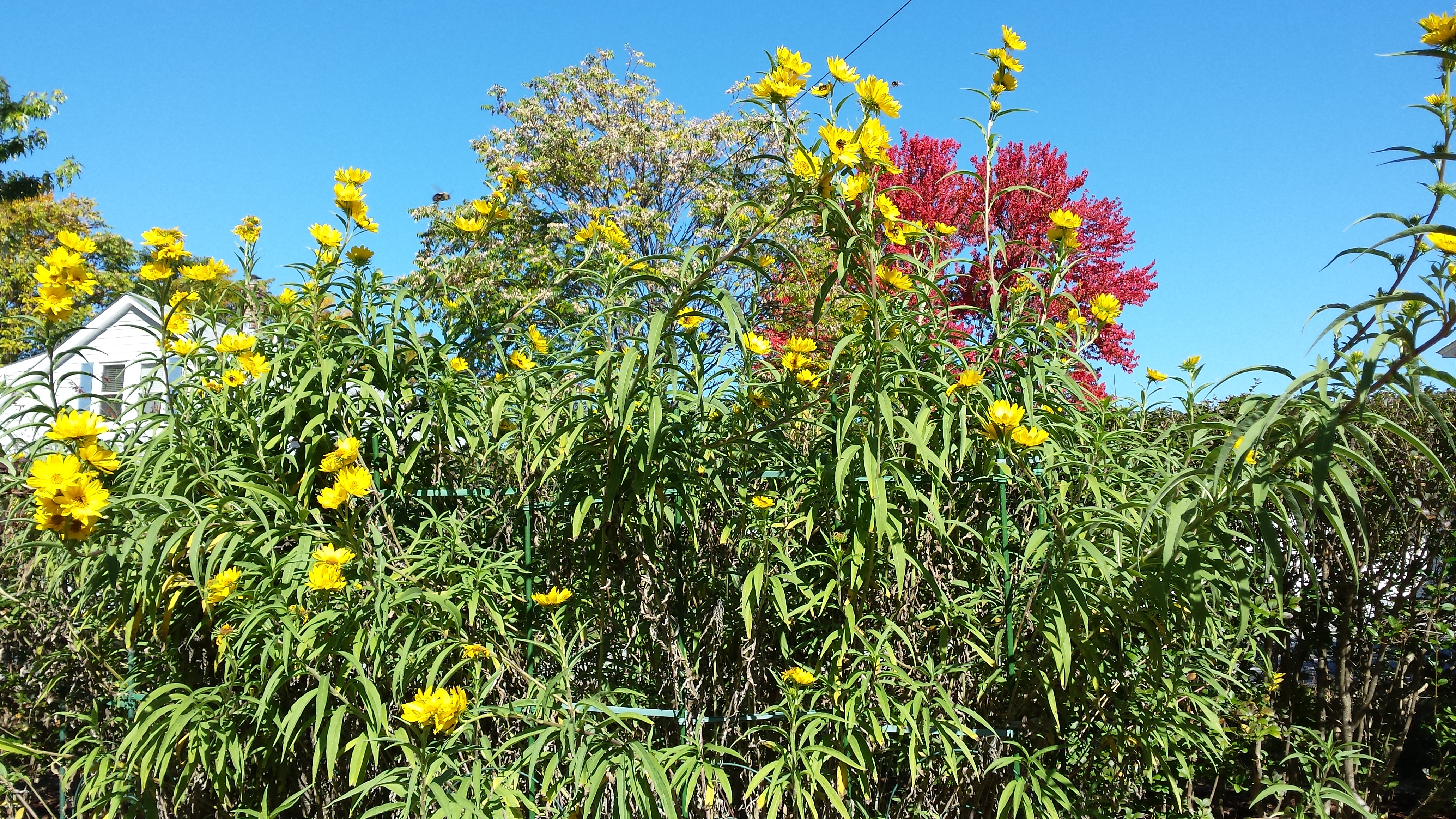
This year, the surprise was late – the Maximillian (or New Mexican) Sunflowers.  These have been in the garden for over a decade, started from seed and over the years have been shared with friends across New England. As I write this, I’m reminded that a clump of them will be travelling this weekend to a special garden of an artist friend in Weare, NH.

20151015_113225 (1)

Not your typical sunflowers, these look ‘weedy’ all summer, until they start to bloom in late September.  This year, the bloom didn’t start until mid October – just in time for the frost that is expected this weekend.  There’s nothing more refreshing than a bright burst of yellow in the garden as everything else is ready to come to an end.

Mother Nature is magical!


1 Comment

Beauty – Always in the Eye of the Beholder

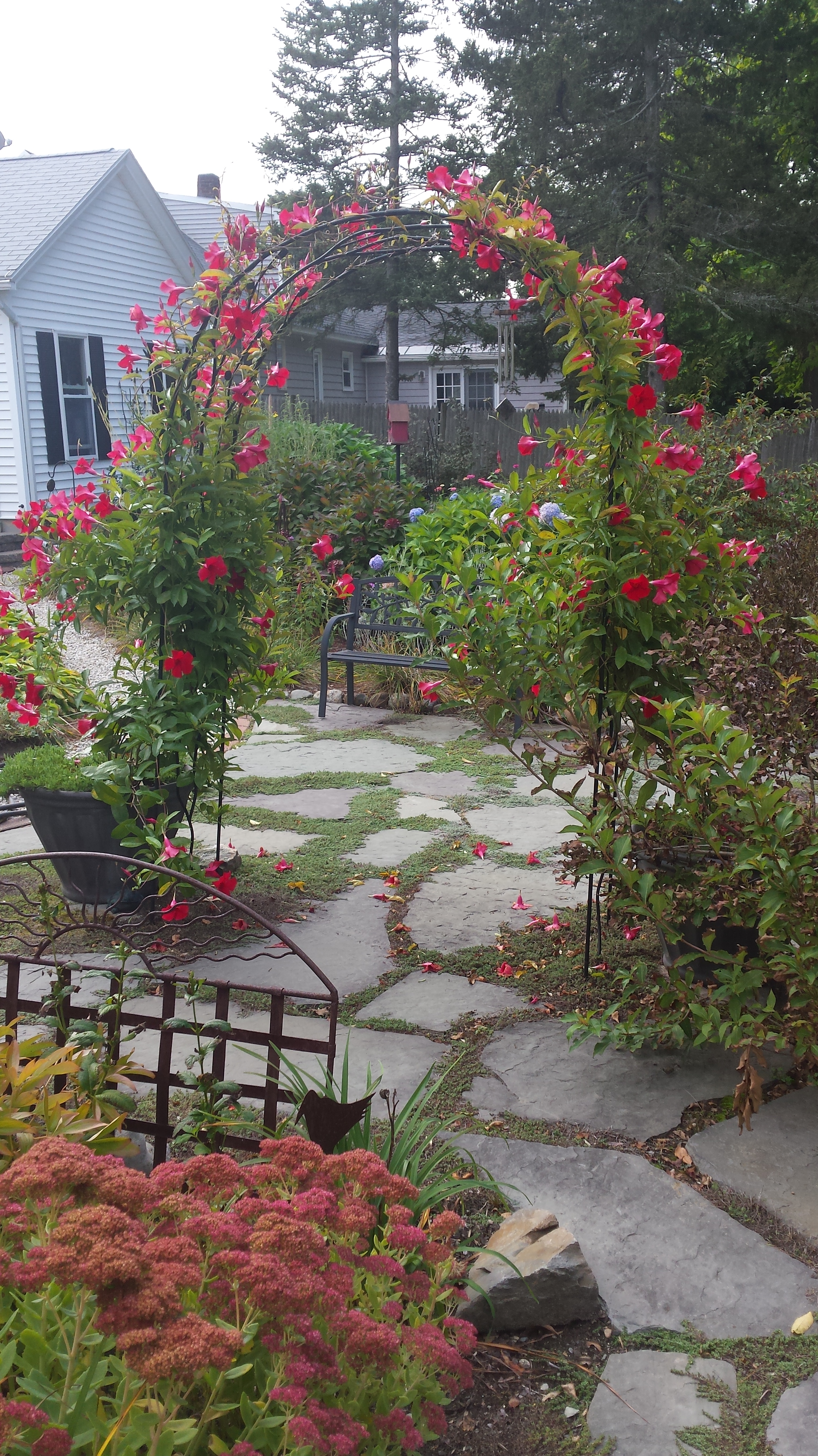
At the end of a very rainy day, I felt the need to stroll through my now fading garden. After a few minutes, I was feeling a little down that the flowers, especially the mandevilla, are starting to shrivel and drop after a very dry summer season.

I heard a car pull up and stop on the other side of the hedge and could see a woman in the driver’s seat waving to me.

She rolled down the window and asked about the “beautiful red flowers” on the trellis. (The mandevilla that I was looking at as she pulled up.)

20151001_102154

The woman got out of her car and told me how she enjoys looking over the hedge and into my garden while she waits to pick up her daughter who visits nearby. (She enjoys listening to the wind chimes and watching the birds, too!)

We chatted for a few minutes about gardening and nature and peacefulness. It was an interaction that lasted only a few minutes.

The irony hit me. I felt sad about the exact same thing that brought her joy.

Before she left, we exchanged introductions. Her name is Grace.


Leave a comment

Fuller Gardens: A Fragrant, Rose Lover’s Paradise

I’ve spent so much time in my own garden this summer, that it was a treat to visit someone else’s last week!

I could have not have picked a better evening than last Wednesday to visit Fuller Gardens in North Hampton, NH. It was the night of their Annual Garden (and Art) Party!

A long time Granite State resident and frequent visitor to our 13 mile seacoast, I’ve passed the sign for this well-known NH garden hundreds of times over the past few decades, but never turned off of Route 1-A for a visit.

The property is within view of the Atlantic Ocean, among the sprawling estates that line the narrow and curvy road along NH’s scenic seacoast. I was a guest of my friend, Bobbi, who is a new resident of this area – she’s also a long-time gardening friend. Plants from each of our gardens have been shared with one another and our families for many years. This was Bobbi’s first visit to Fuller Gardens, too.

We were both in awe of the rose gardens that include 125 varieties and 1700 bushes. Immediately, we noticed that the roses in our own gardens aren’t planted like the ones at Fuller Gardens. Neither of us mound the soil around the crowns of our own rose bushes.

The beauty all around us was almost overwhelming. Right away, we found the path that lined the area of the David Austin roses. The fragrance enveloped the area — there’s no better scent than that of rose mixed with the misty sea air (if it were bottled, I’d buy it all!)

There were hundreds of people at this garden soiree. But, I didn’t notice until I looked through my photos the next day that I captured a moment when the gardens appeared to be quiet and lonely. The reality is that the air was not only filled with the fragrance of salt air and roses, but also with the sounds of jazz and people laughing and talking, and ooohing and ahhhing! Only one of the artists (and none of the party-goers) was in what is now my favorite photo from that evening. Several artists from across the region were sprawled around the property, all painting their own beautiful interpretations of the gardens.

Garden2015-FullerThis is how I will always remember Fuller Gardens. Serene, fragrant, and overwhelmingly beautiful.

While the estate also features a gorgeous Japanese Garden, Conservatory, and English Perennial Garden, Fuller Gardens is definitely a rose lover’s paradise. It is now at the top of my list of “must-visit” places for people who travel to and through New Hampshire.

I can’t wait to go back! (And tend to the roses in my own garden a little bit better!)